
DMEGC 2600mAh Cell Li-ion 3.7V 18650 3C Grade – ENERGY SYSTEM INDIA (ESIV)
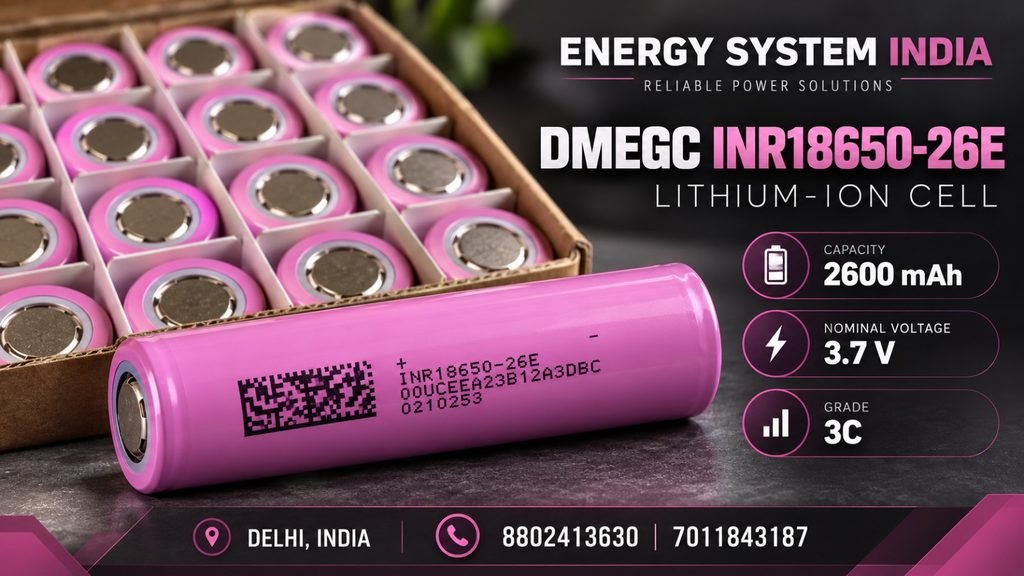
The DMEGC 2600mAh Cell Li-ion 3.7V 18650 3C Grade is a rechargeable cylindrical battery cell developed for applications that require dependable energy storage and consistent electrical performance. With a nominal capacity of 2600mAh and a 3C discharge rating, this lithium-ion cell offers a practical combination of energy capacity, current delivery and compact dimensions.
Its 18650 format makes it suitable for compatible battery assemblies, portable electronic equipment, lighting systems and other rechargeable power applications. The cell can also be incorporated into custom battery packs when the required voltage, capacity and discharge specifications match the application.
Technical Specifications of DMEGC 2600mAh 18650 Cell
Understanding the electrical and physical characteristics of a battery cell helps determine whether it is suitable for a particular device or battery pack.
| Parameter | Specification |
|---|---|
| Brand | DMEGC |
| Model | INR18650-26E |
| Battery Chemistry | Lithium-Ion |
| Cell Type | Cylindrical |
| Cell Format | 18650 |
| Marketed Nominal Voltage | 3.7V |
| Manufacturer-Specified Nominal Voltage | 3.65V |
| Nominal Capacity | 2600mAh |
| Minimum Capacity | 2500mAh |
| Maximum Charging Voltage | 4.2V |
| Maximum Discharge Rate | 3C |
| Corresponding Maximum Discharge Current | 7.8A |
| Standard Charging Current | Approximately 1.3A |
| Standard Discharge Current | 2.6A |
| Approximate Dimensions | 18.25mm × 65mm |
| Maximum Weight | Approximately 47g |
| Rechargeable | Yes |
Actual performance depends on operating conditions and the specifications of the exact cell supplied.

Key Features of the DMEGC 2600mAh Lithium-Ion Battery
1. 2600mAh Energy Capacity
The DMEGC 18650 cell provides a nominal capacity of 2600mAh, equivalent to 2.6Ah. At its manufacturer-specified nominal voltage of 3.65V, this corresponds to approximately 9.49Wh of nominal energy.
This capacity makes the cell suitable for equipment that requires a compact rechargeable power source. The actual operating time will depend on the connected device’s power consumption, discharge current and operating conditions.
2. 3C Discharge Capability
The 3C rating describes the cell’s discharge capability relative to its rated capacity. For a 2600mAh cell, a 3C discharge rate corresponds to a current of 7.8A.
This characteristic can be useful in applications that require more current than low-power electronic devices typically consume. However, the permitted discharge current must always follow the manufacturer’s specifications for the exact cell model and operating temperature.
3. Standard 18650 Cylindrical Format
The cell follows the widely used 18650 cylindrical format. Its approximate dimensions are 18.25mm in diameter and 65mm in length.
This standardized form factor allows the cell to fit into compatible holders and battery pack designs. Before installation, the dimensions, terminal arrangement and electrical requirements should be checked against the intended equipment.
4. Rechargeable Lithium-Ion Chemistry
Lithium-ion technology allows the cell to be recharged and reused rather than replaced after every discharge.
For suitable applications, this rechargeable design provides a practical energy storage solution. Charging must be performed with a compatible lithium-ion charging system that follows the specified voltage and current limits.
5. Electrical Efficiency
Internal resistance influences voltage drop and heat generation when current flows through a battery cell. The manufacturer’s specified internal resistance for the INR18650-26E is less than 25mΩ under defined test conditions.
Actual resistance can vary with temperature, state of charge, cell age and measurement method. Maintaining appropriate operating conditions helps support reliable battery performance.
Applications of the DMEGC 2600mAh 18650 3C Grade Cell
The DMEGC 2600mAh lithium-ion cell can be considered for a variety of applications when its electrical characteristics meet the equipment’s requirements.
Rechargeable Battery Packs: Multiple cells can be assembled into battery packs to achieve the required voltage and capacity. Series connections increase voltage, while parallel connections increase available capacity and current capability.
Portable Electronic Equipment: Compatible electronic devices can use this cylindrical cell as a rechargeable energy source when their voltage and discharge requirements match the cell specifications.
LED Lighting Systems: Rechargeable lamps, portable lights and compatible emergency lighting equipment may use 18650 lithium-ion cells for power storage.
Backup Power Applications: The cell can be incorporated into appropriately designed backup battery systems where the required energy capacity and discharge current are suitable.
Electronic and Robotics Projects: Compatible electronic prototypes, robotics equipment and other rechargeable systems may use the cell as part of a properly engineered power supply.
The suitability of the cell should be assessed individually for each application rather than assumed from its capacity or discharge rating alone.
“DMEGC 2600mAh Cell Li-ion 3.7V 18650 3C Grade“
Charging and Discharging Guidelines
Correct charging practices are essential for the performance and safe operation of lithium-ion cells.
The specified maximum charging voltage for the INR18650-26E is 4.2V per cell. Its standard charging current is approximately 1.3A, subject to the manufacturer’s charging procedure.
A compatible charger should use the appropriate constant-current/constant-voltage charging method. The cell must not be charged beyond its specified voltage limit.
For battery pack construction, cells should be appropriately matched, and the completed pack should include a suitable Battery Management System (BMS) where required. Protection should be designed for the intended series and parallel configuration, current limits and charging method.
Avoid short circuits, physical damage, reverse polarity and exposure to temperatures outside the permitted operating range. Do not use swollen, leaking or damaged cells.
Conclusion
The DMEGC 2600mAh Cell Li-ion 3.7V 18650 3C Grade offers a compact rechargeable design, 2600mAh nominal capacity and a 3C discharge rating. Its cylindrical construction makes it suitable for compatible battery packs, portable electronics, lighting equipment and other applications requiring lithium-ion energy storage.
Selecting the correct cell requires checking the operating voltage, capacity, discharge current, dimensions and charging requirements of the intended device. When these specifications are compatible and the cell is operated according to its technical limits, it can provide a practical power source for rechargeable applications.